
See. Hear. Detect: CTBTO Science in Action at Long Night of Research
On 24 April the Comprehensive Nuclear-Test-Ban Treaty Organization (CTBTO), together with other Vienna-based international organizations, took part in Austria’s Long Night of Research, also known as Lange Nacht der Forschung in German.
Hosted at the Vienna International Centre (VIC) and at more than 250 locations across the country, the event offered visitors a chance to engage directly with experts, and to explore how research and technology shape everyday life.
At its stand, the CTBTO invited the public to discover how science and international cooperation work hand in hand to detect nuclear weapon test explosions.
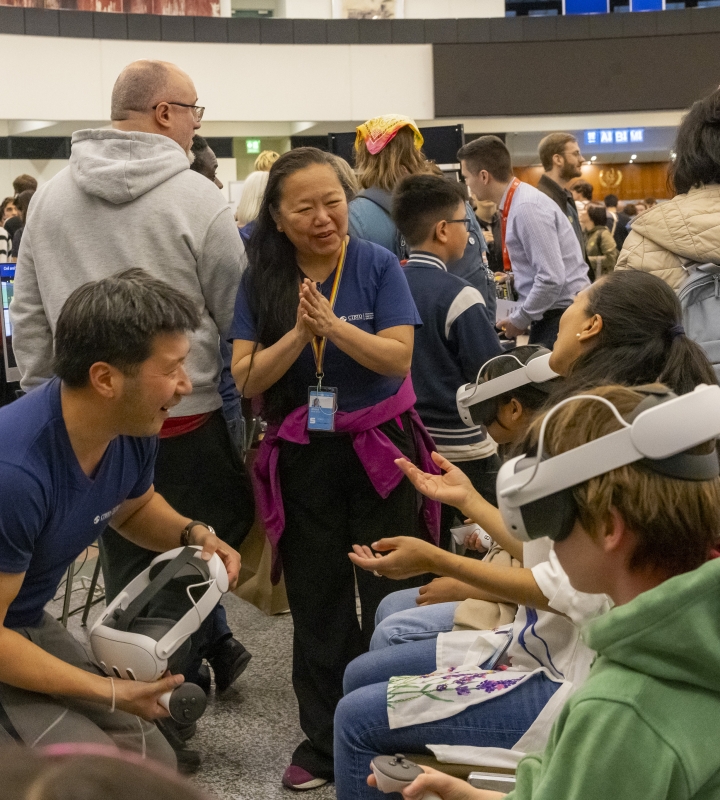
Children exploring virtual reality at CTBTO stand
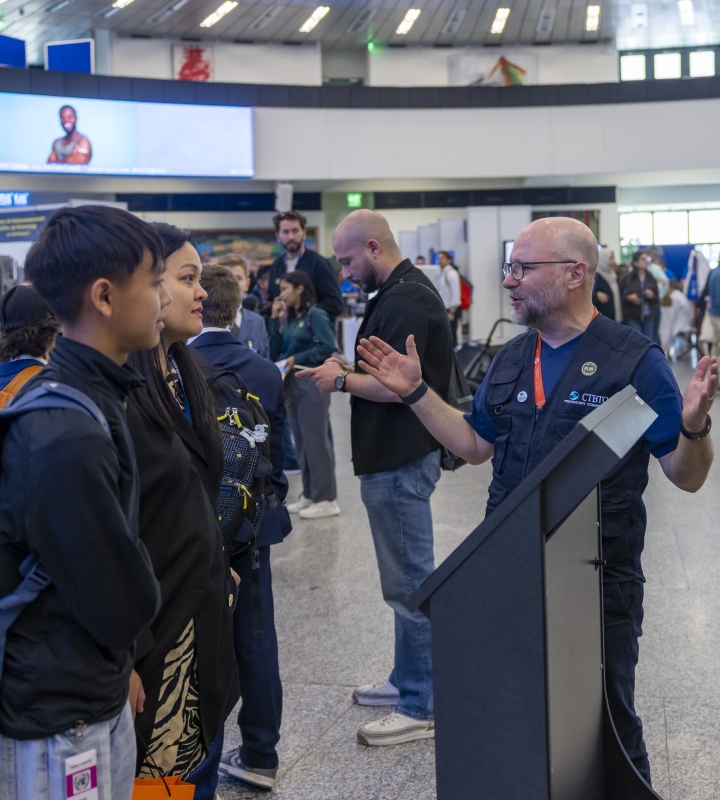
Public Information (PI) staff speaking to visitors using interactive OmniGlobe, which provides visual overview of CTBTO's IMS
It is incredibly inspiring to see strong interest from students and young people in initiatives like the Long Night of Research. These kinds of exchanges help bridge the gap between complex scientific work and everyday understanding, showing not only how our technologies operate, but also how they contribute to global peace and security.
Throughout the evening, visitors moved through a series of interactive areas, each highlighting a different component of the CTBT’s verification regime. From global monitoring to data analysis and on-site inspection, the experience offered a clear and practical look at how the system works in practice.
Monitoring the Planet in Real Time
In one area, visitors discovered how the CTBTO monitors the planet through the International Monitoring System (IMS), a global network that uses seismic, infrasound, hydroacoustic and radionuclide technologies to detect nuclear test explosions.
Interactive displays showed how sensors record signals and how data travels in near real-time from facilities around the world to the CTBTO’s International Data Centre (IDC) in Vienna. The OmniGlobe provided a striking global view, allowing visitors to visualise the reach of this vast network.
Opportunities like the Long Night of Research allow the hard-working staff of CTBTO to have real conversations with the public. Answering important questions like ‘What does it mean for me?’ and ‘Why should I care?’ When we do our job right, they become ambassadors of our work to their friends, families, governments, strengthening the network of knowledge and support.
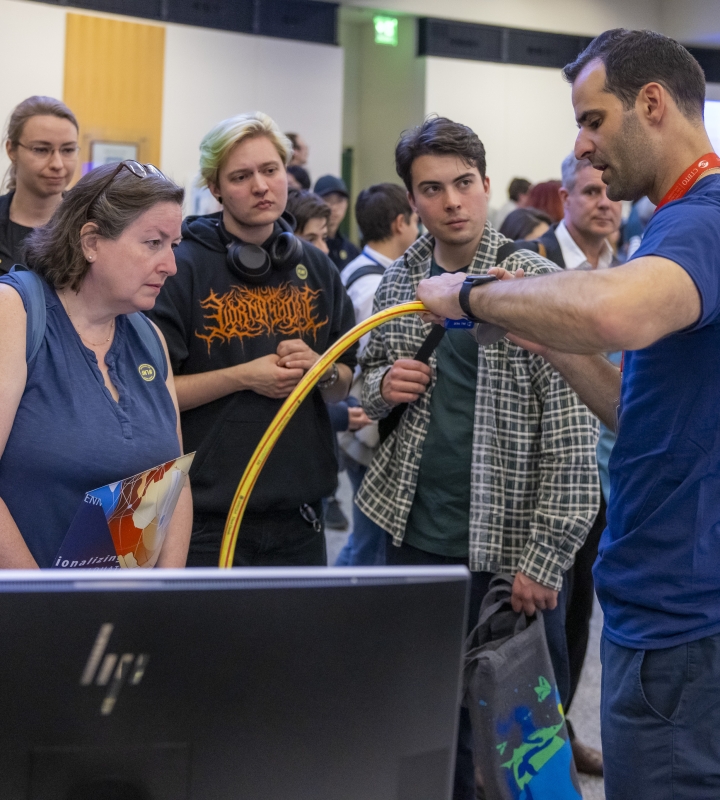
IMS staff demonstrating how inlet port and hose is connected to infrasound microbarometer, which is designed to minimize wind noise interference during data collection
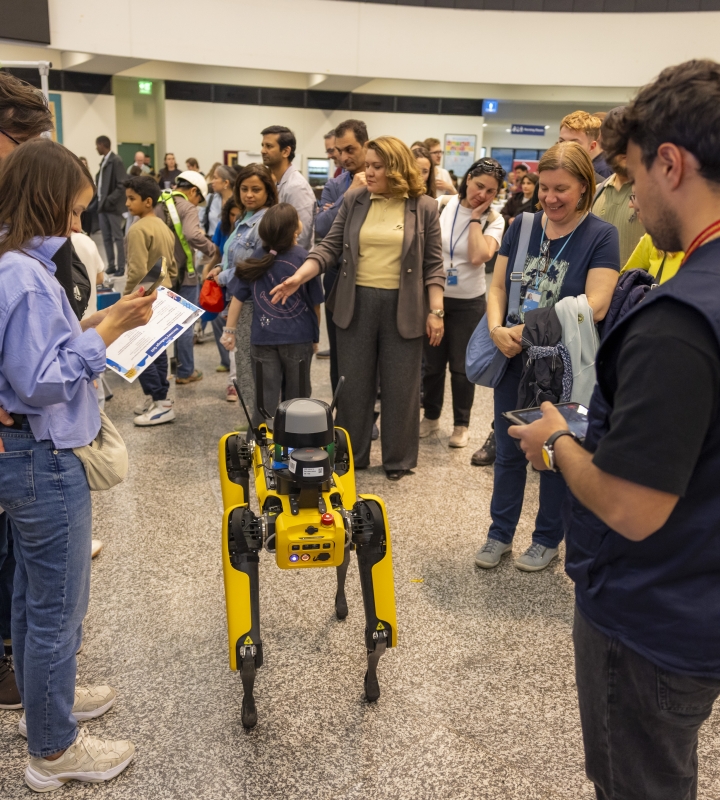
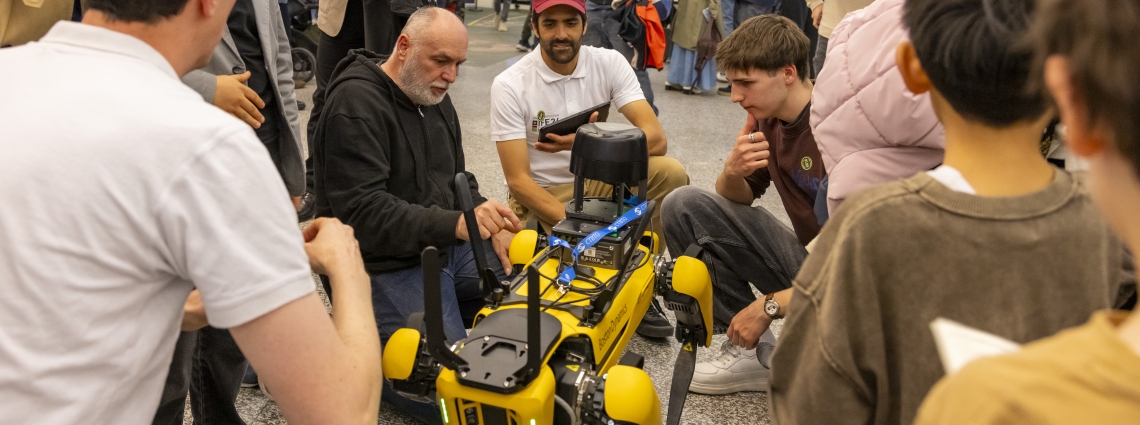
OSI’s robot dog at Vienna International Centre (VIC)
What makes this event so valuable for us is that we can show, in a very direct way, how the data that comes into Vienna is turned into something meaningful. It is not often that people get to see that process up close.
From Signals to Answers
At the IDC demonstration, participants learned how analysts examine waveform and radionuclide data to determine what occurred and where.
Replica workstations and visualisations illustrated how raw data becomes reliable information for decision-makers worldwide.
One visitor, Mohamed Mustafa Iqbal, a junior scientist from India reflected: “It is really interesting because we had some understanding about the work of some of the other international organizations, but not the CTBTO. Now, we are learning about it from the actual experts.”
Another member of the public, 14-year-old Ahmed Zahran Mohamed from Egypt said: “I am very excited and it will not be the last time I come here. Perhaps one day, I will even work at the CTBTO.”
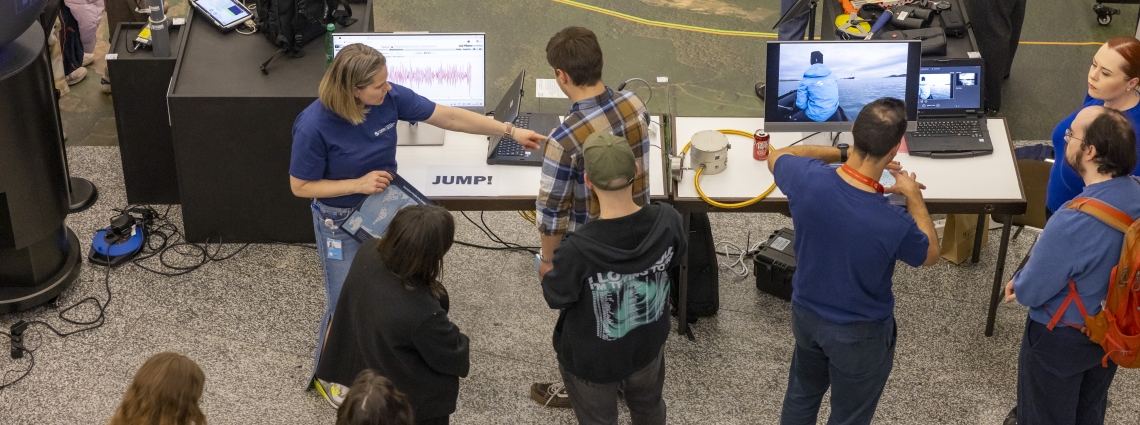
IMS staff speaking to members of public about work and mission of CTBTO
Inside an On-Site Inspection
The final part of the exhibit took participants into the field, showcasing the tools and techniques used in on‑site inspections (OSI), the Treaty’s ultimate verification measure once the CTBT enters into force.
At the centre of the exhibit, a carpeted layout representing a Base of Operations (BoO) gave visitors a sense of how an inspection site is organised in the field. Around it, they explored equipment such as a robot dog for remote access, while virtual reality simulations provided an immersive view of inspection activities on the ground.
This was also an opportunity to speak to the public about OSI’s upcoming Integrated Field Exercise (IFE) in Namibia, the third of its kind.
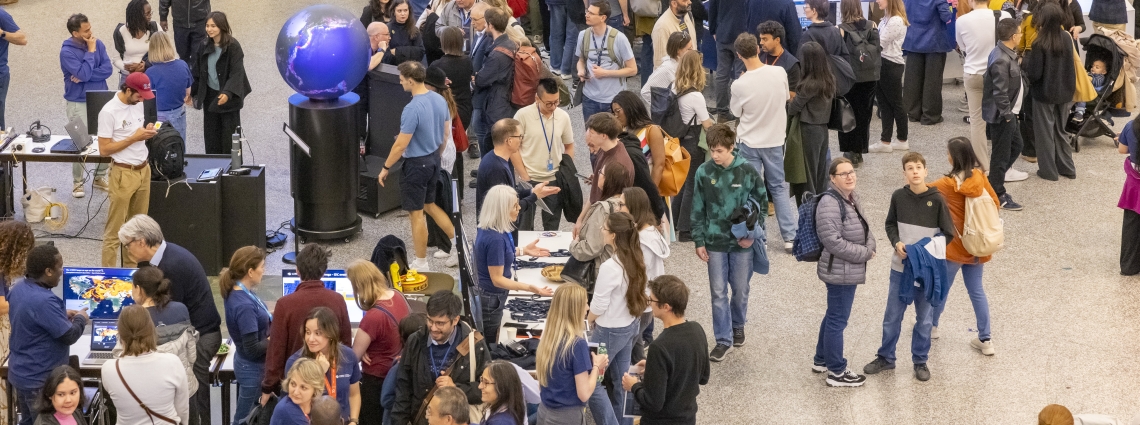
CTBTO booth at Long Night of Research
For me, it is fun to show to the children of even some of our colleagues what we are doing here in the VIC and at the CTBTO.
According to a visitor survey, 71 percent said they gained a better understanding of the Treaty and its role in supporting the nuclear non-proliferation and disarmament regime.
The strong public turnout, with 2,900 visitors at the VIC, highlighted the value of continued outreach and dialogue, helping to connect the CTBTO’s global mission with the people it serves.
27 Apr 2026
Flickr Album: Long Night of Research
