
US nears IMS completion with Antarctic infrasound station
A milestone at the edge of the world
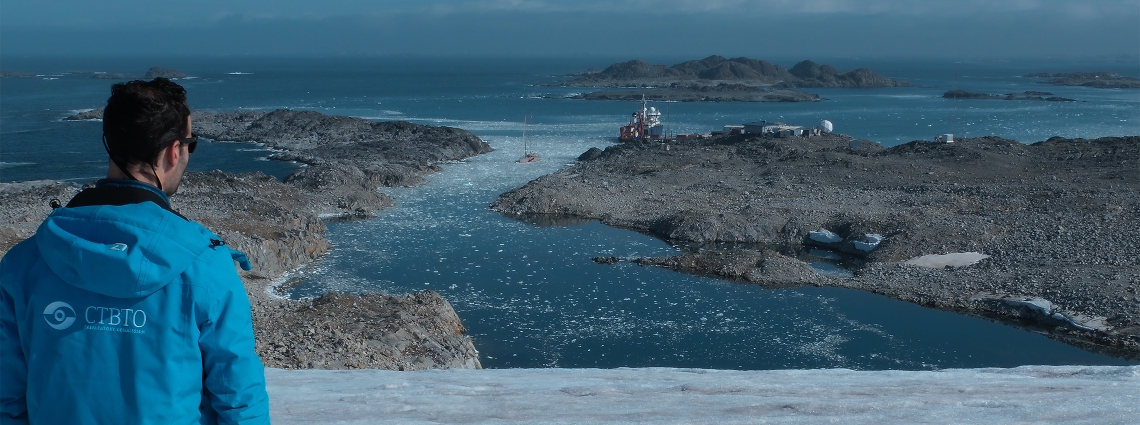
With the successful installation of infrasound station IS54 at Palmer Station in February, the United States has entered the final phase of completing its segment of the International Monitoring System (IMS), pending certification. This milestone marks the culmination of decades of planning and coordination, extending the global verification regime to one of the most remote and demanding environments on Earth.
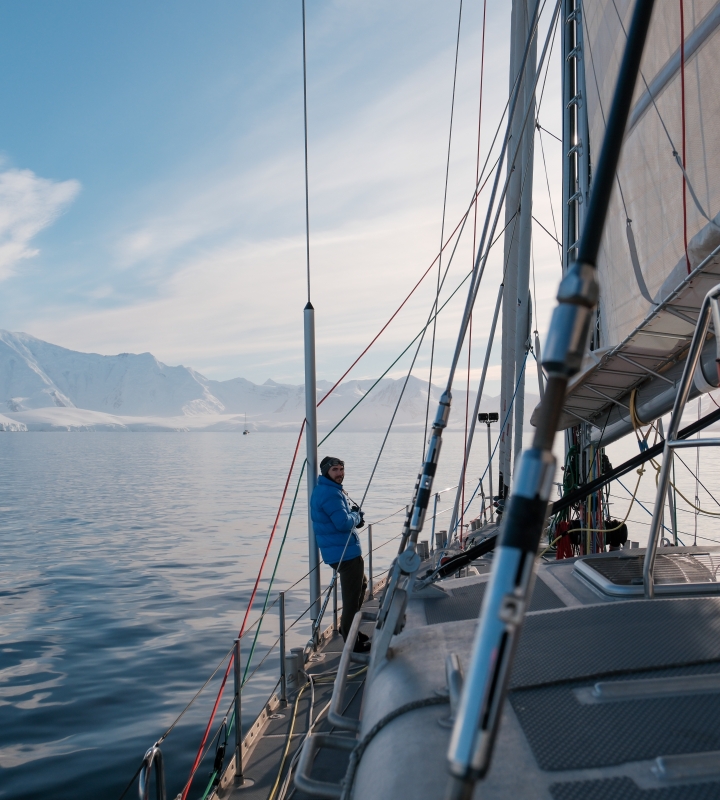
UAF/WATC Engineer Riley Bickford aboard S/V Pelagic Amundsen, Anvers Island visible on horizon
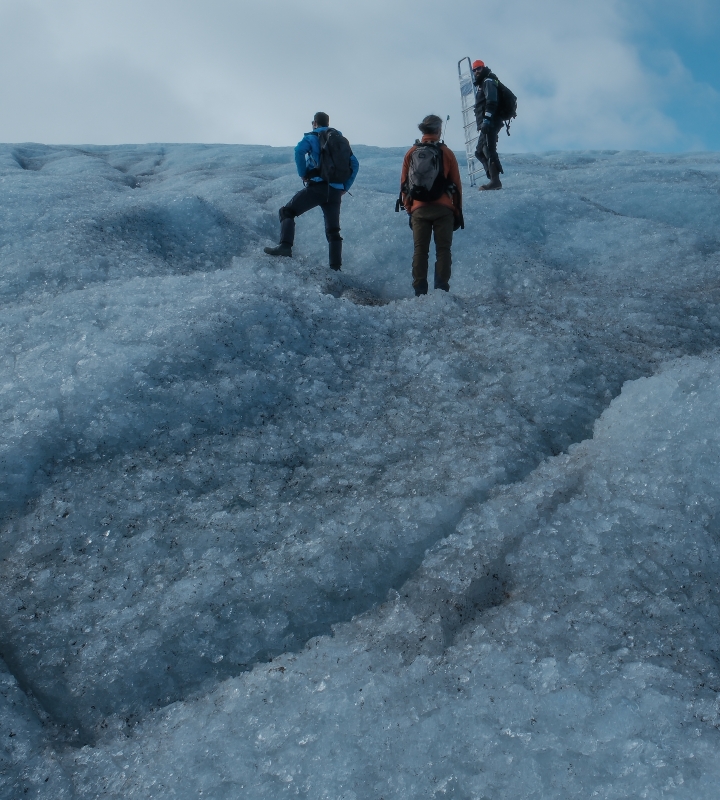
IS54 installation team hike across glacier behind Palmer Station to access element IS54 H3
Located on Anvers Island in the Antarctic Peninsula, IS54 is the last of four infrasound stations designated for Antarctica under the Treaty. Together with radionuclide station RN73 and auxiliary seismic station AS106 at Palmer Station, it strengthens the Comprehensive Nuclear-Test-Ban Treaty Organization’s (CTBTO) ability to detect nuclear weapon test explosions.
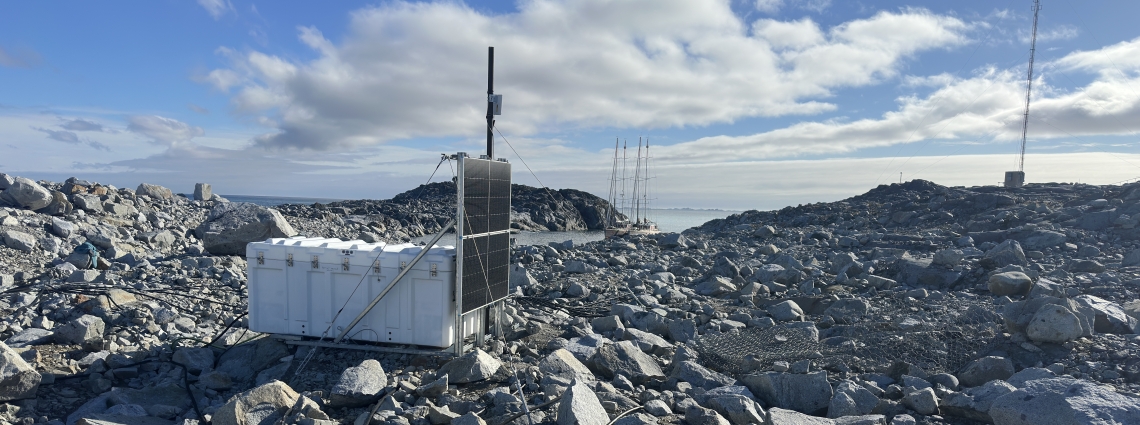
Completed IS54 H1 element, with S/V Pelagic 77 Amundsen in background
The installation also reflects a broader achievement. Antarctica, often described as the coldest, driest, and windiest continent, presents unique operational challenges. Establishing and sustaining monitoring stations in such conditions requires both technical precision and logistical ingenuity.
An unconventional journey south
Getting the equipment to Palmer Station required a different approach. The project relied on a 24-metre sailing vessel, the Pelagic 77 Amundsen. It was the first time this method has been used for a CTBTO station installation.
Initial transport began in January, when engineers from the Wilson Alaska Technical Center (WATC) at the University of Alaska Fairbanks, responsible for operating IS54, coordinated the delivery of equipment to Palmer Station. The equipment was shipped aboard the support vessel M/V Sola.
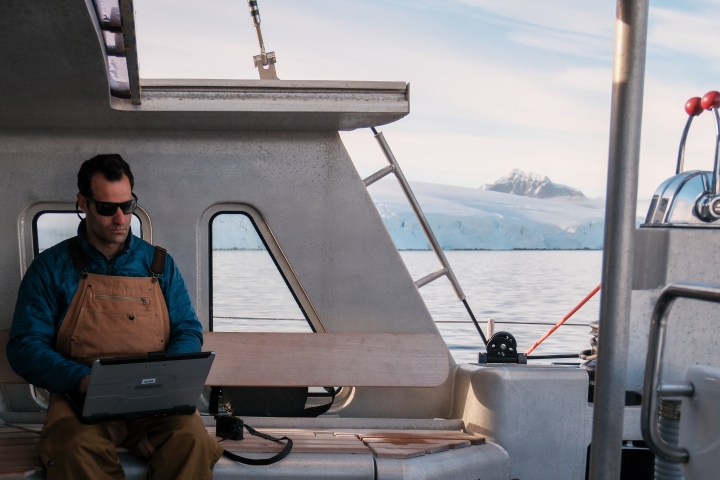
CTBTO Seismoacoustic Engineer, Gregory Brenn, reviewing data transmission as S/V Pelagic Amundsen navigates through Gerlache Strait, Antarctica

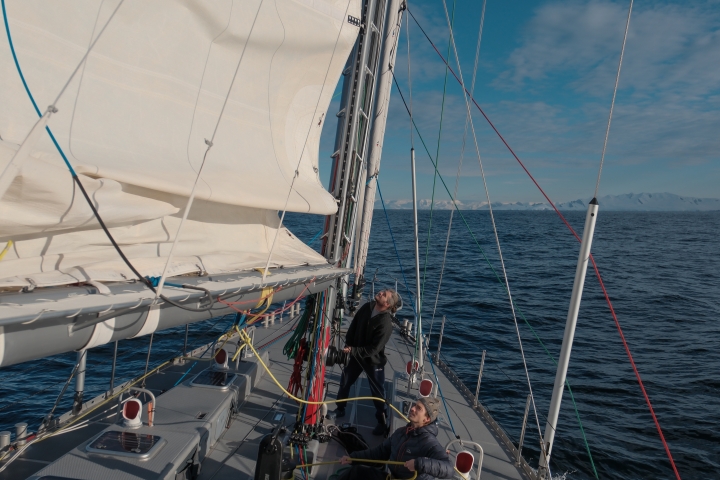
First Mate Eoin Keyes and Crew Luca Novak raising mainsail in Gerlache Strait, Antarctica

“Transporting two 20-foot containers of 30,000 pounds of break-bulk cargo from the Northern Hemisphere to Antarctica come with their challenges. We needed a boat crew willing to help move container loads of scientific supplies, and both Sola and Amundsen crews proved their mettle in spades,” said D’Aoust.
Following the delivery, the engineers regrouped at King George Island before returning north to Ushuaia, Argentina, where they joined the wider installation team for the next phase of the mission.
It was nothing short of magical to be enveloped in the close confines of Amundsen’s salon with the first leg of the project behind us.
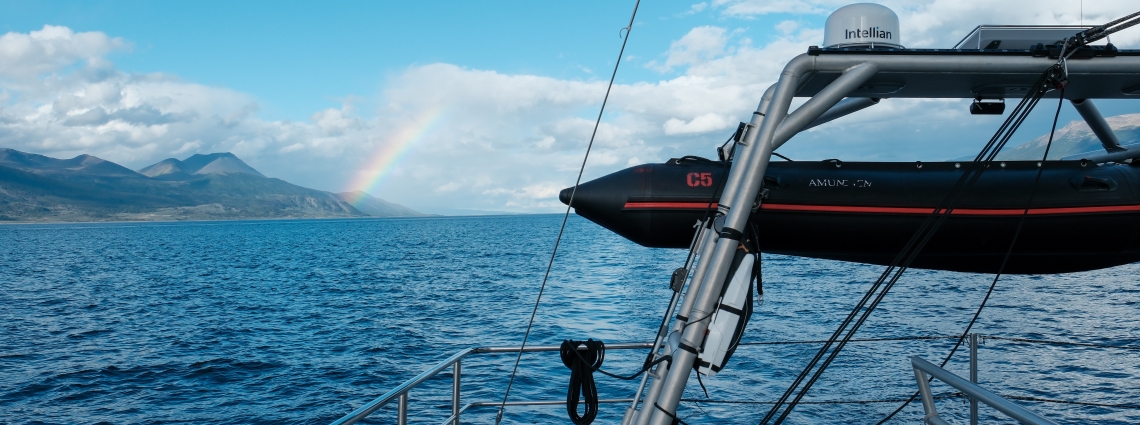
Rainbow over Beagle Channel, just off stern of S/V Pelagic Amundsen, en route to Drake Passage
Crossing the Drake Passage
The team was now supported by CTBTO Seismo-acoustic Engineer Gregory Brenn and five sailors from the Amundsen. With the foredeck stocked with provisions, engines fuelled, and emergency safety briefings completed, they were ready to begin the second phase of the installation.
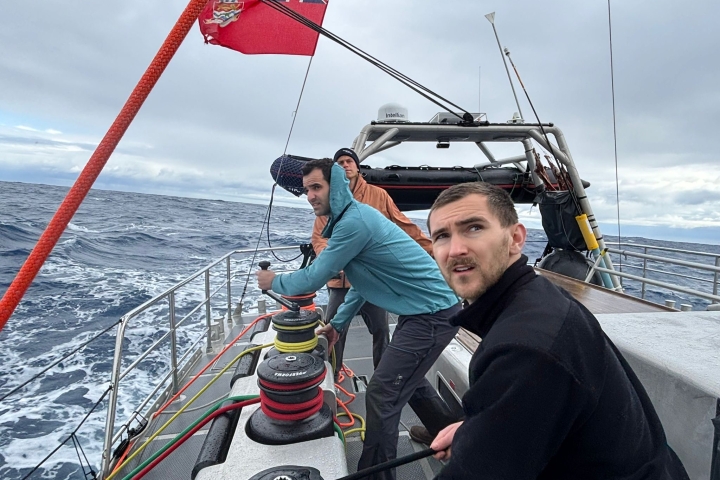
(Left to Right) WATC Engineer Riley Bickford and CTBTO Seismoacoustic Engineer Gregory Brenn working winches in Beagle Channel, with Skipper Tor Bohim providing direction

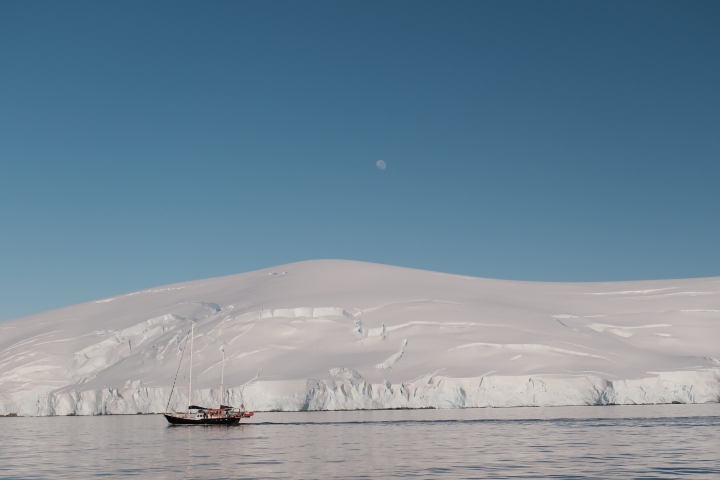
The Pelagic S/V Amundsen passes another expedition sailboat in Gerlache Strait

Skip Novak, the Amundsen’s Expedition Leader and a pioneer of sailing expeditions in the polar latitudes, saw the mission as a natural fit.
The second phase began with a southbound voyage from Ushuaia aboard the Amundsen. The 10-person team navigated the Beagle Channel, rounded Cape Horn, and entered the Drake Passage, a stretch of water known for its rapidly changing weather and demanding sea conditions.
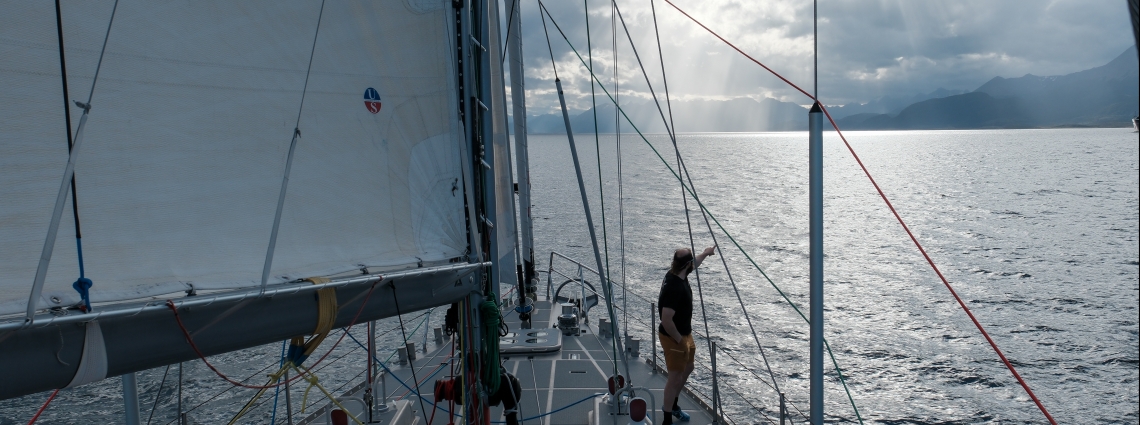
UAF/WATC Engineer Matt VonLintig points to horizon, on approach through Beagle Channel
For many of the installation team, the journey was their first experience at sea. Under the guidance of expedition leader Skip Novak and his experienced crew, team members took on practical roles during the crossing, from handling sails to standing watch.
We jumped at the chance to support this project because the brief outlined something we are particularly good at, especially when it involves a degree of uncertainty alongside the usual Antarctic challenges, including weather, ice conditions, and not least crossing the Drake Passage in a relatively small sailboat.
Crew member Kate Schnippering described the realities of the passage.
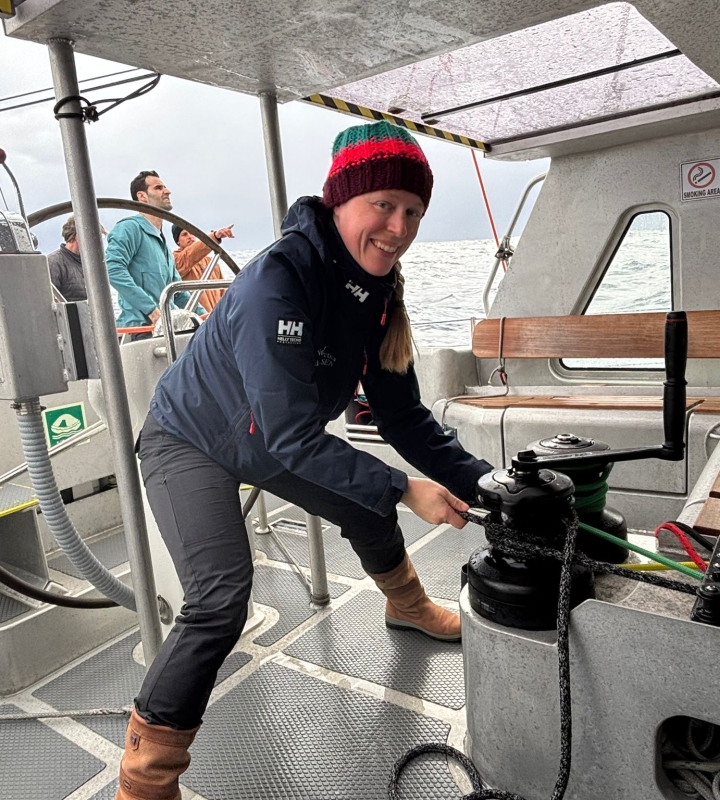
Crew Member Kate Schnippering handling lines of S/V Pelagic Amundsen
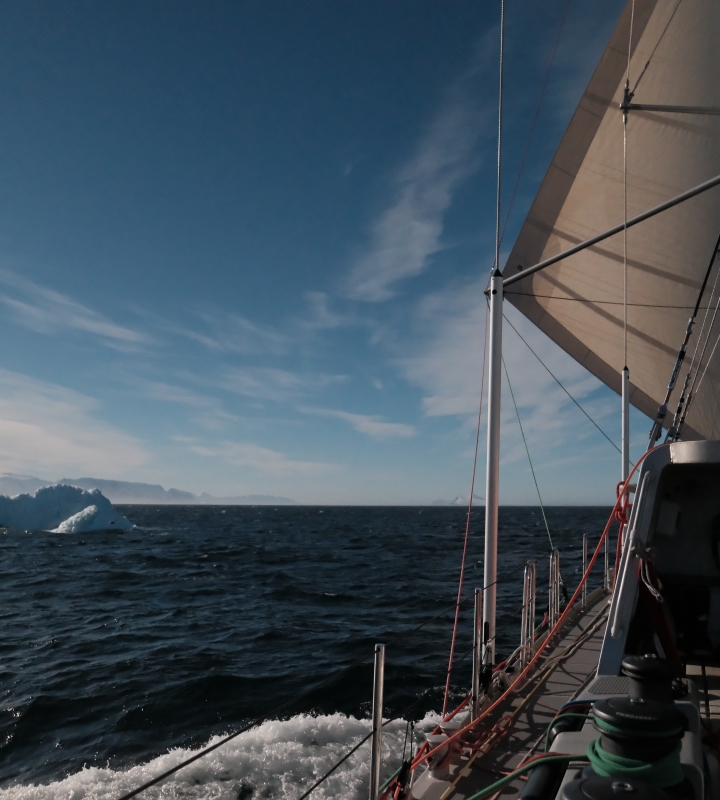
Lone iceberg in Gerlache Strait
As a sailboat, it typically takes us four to five days to cross the Drake Passage. Compared to other open-ocean sailing, we might be on deck dealing with winds of over 40 knots, snow and sea spray, and as we cross south of the Antarctic Convergence, we must be constantly on the lookout for icebergs.
Establishing the station
Upon arrival at Palmer Station, the Amundsen was moored in Hero Inlet, a narrow channel adjacent to the base. For the next 20 days, the vessel served as both transport and accommodation for the team.
Daily operations involved repeated transfers between ship and shore using inflatable boats. Progress was occasionally slowed by brash ice drifting into the inlet, requiring constant adjustment to plans and schedules.
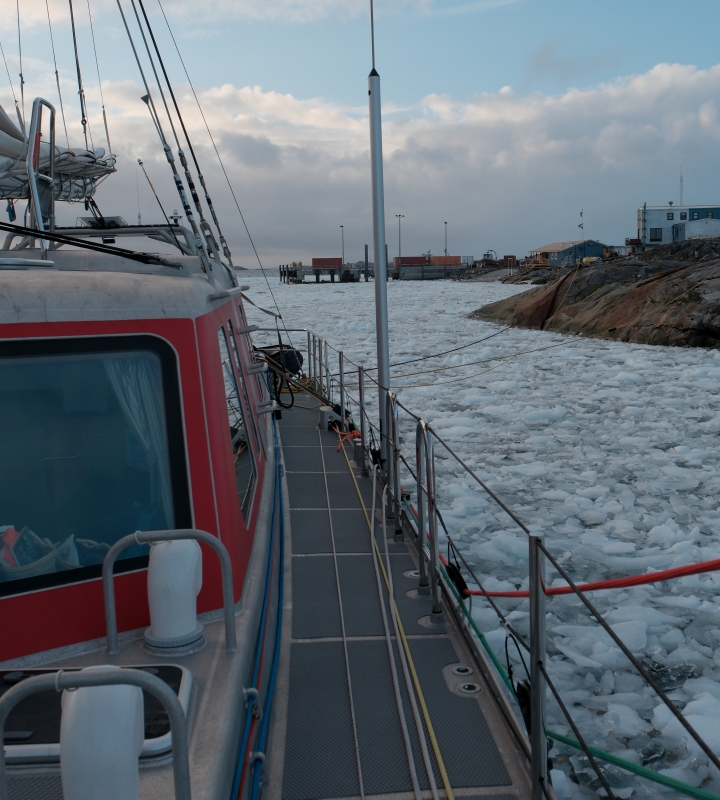
S/V Pelagic 77 Amundsen moored in Hero Inlet, surrounded by brash ice, with Palmer Station in background
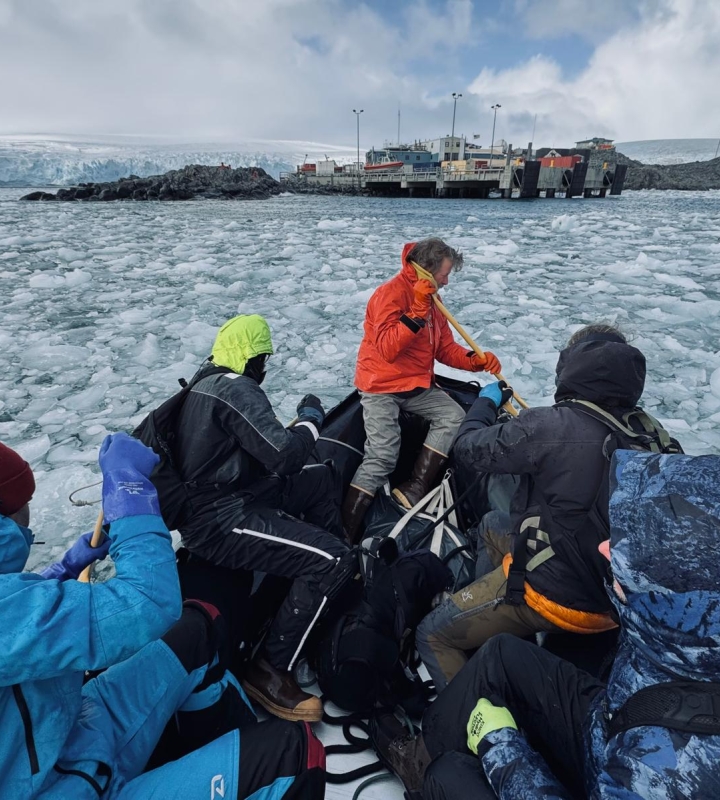
IS54 team pushing through ice towards S/V Pelagic Amundsen, re-entering Hero Inlet
The installation itself was labour-intensive. Equipment, including batteries, vaults, sensors, and structural components, had to be transported by hand across uneven terrain to each designated site. In total, more than 700 kilograms of batteries alone were distributed across the array.
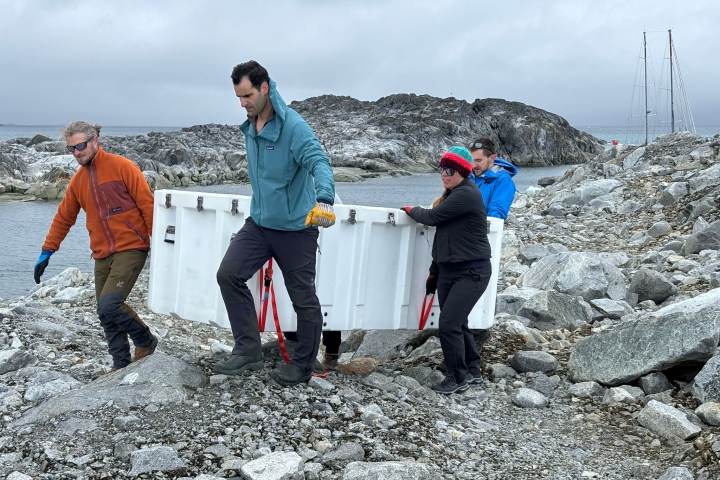
IS54 installation team carrying equipment vault to IS54 H1 element

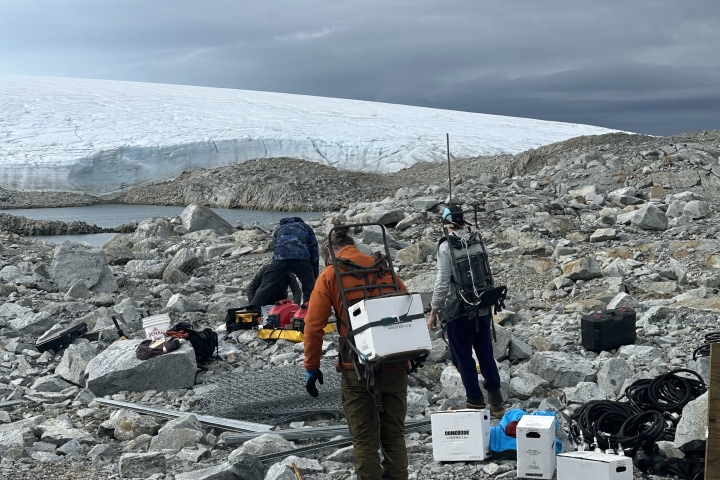
IS54 installation team transporting batteries to IS54 H1 element

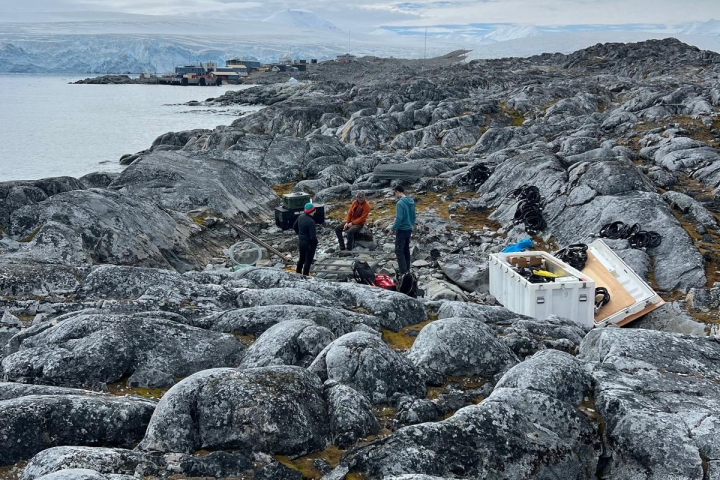
IS54 installation team taking stock of equipment at IS54 H4 element before installation begins

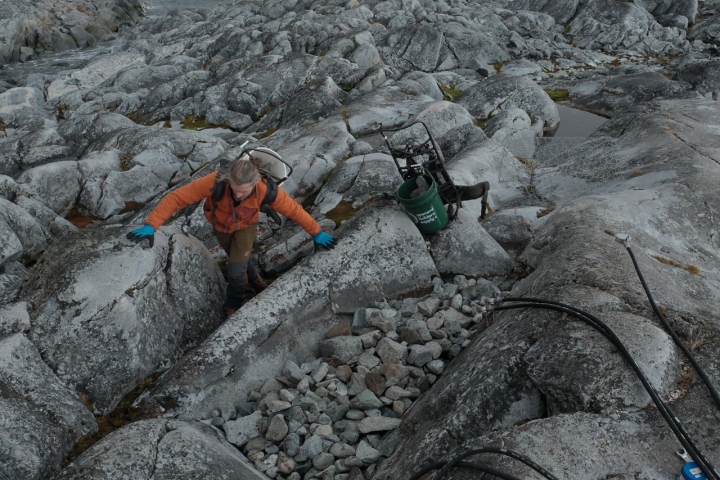
First Mate Eoin Keyes helping IS54 installation team carry gravel from shore up to H4 installation site

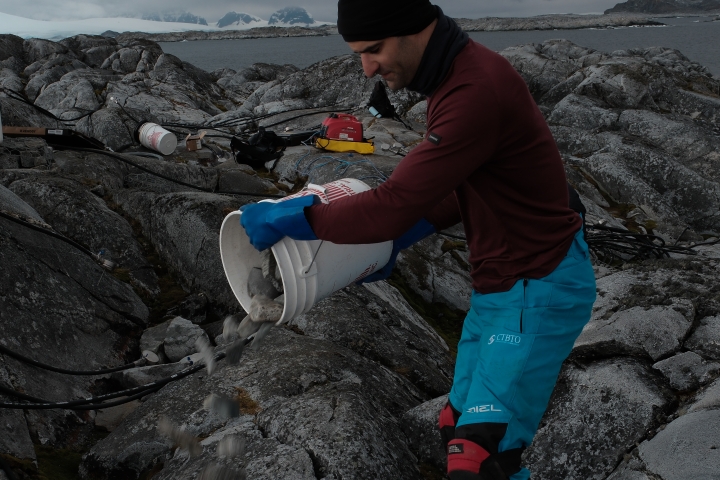
CTBTO Seismoacoustic Engineering Officer Gregory Brenn pouring rock for IS54 H4 element, creating level base for equipment vault

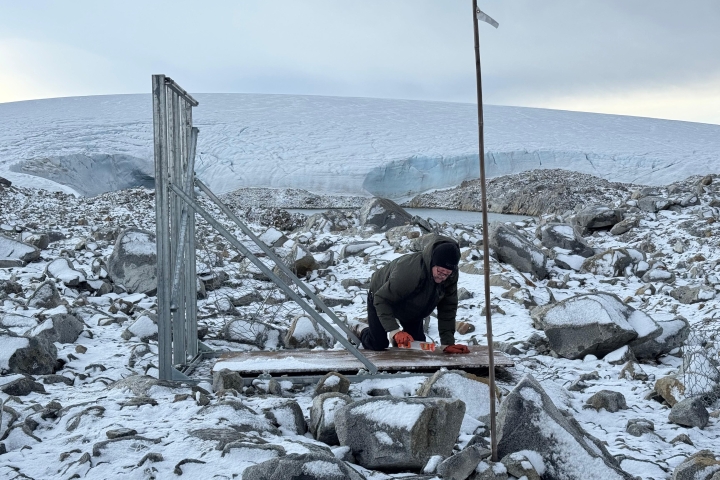
Tony D'Aoust, UAF/WATC Power System Engineer installing equipment vault base at IS54 H1 element

Work proceeded sequentially across the four elements of the infrasound array. Each site required levelling of rock surfaces, installation of vault structures, connection of hoses for the wind noise reduction system, and integration of power and communications systems. Once completed, each element was carefully covered and secured to withstand the Antarctic environment.
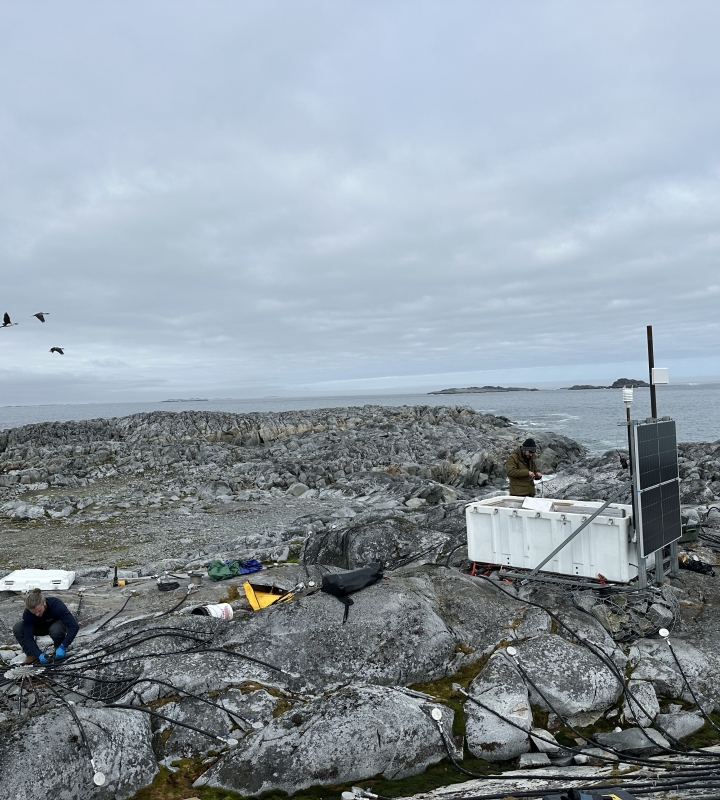
IS54 installation team busy at work installing vault equipment and wind noise reduction system hoses at IS54 H4 element
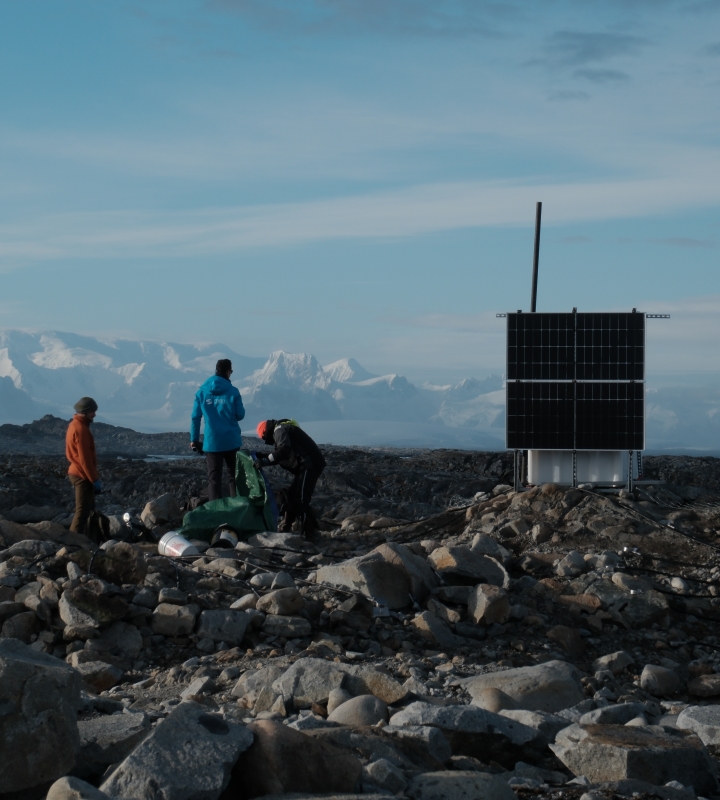
Commencement of early morning installation work at IS54 H3 element
The work was physically intensive, but we found a good rhythm. We had to be resilient to the weather, the terrain and the time constraints, and we knew we had one shot. There was no other option.
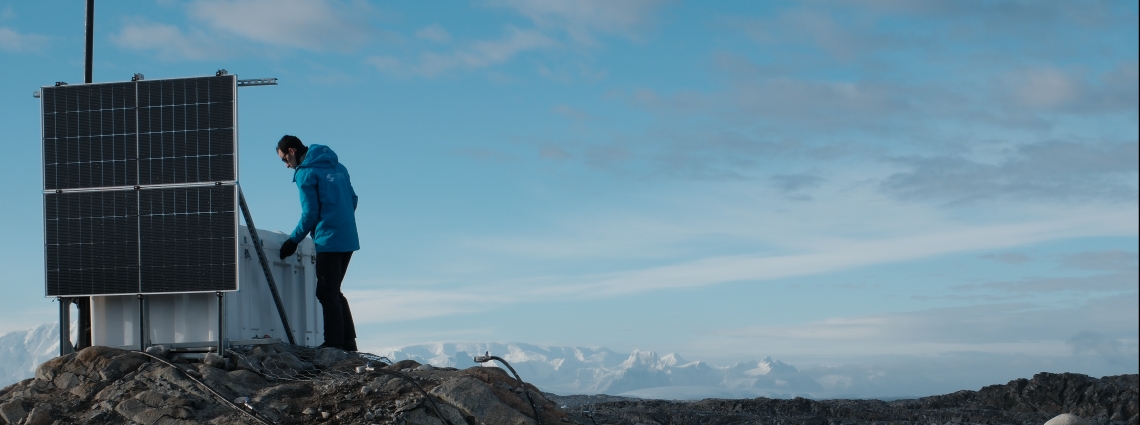
Brenn inspecting vault at IS54 H3 element
Listening to a dynamic landscape
Even during installation, the environment offered a reminder of the station’s scientific potential. The team frequently heard sharp cracking sounds from the Marr Ice Piedmont, a glacier dominating the local landscape. These calving events, already captured in the station’s infrasound data, illustrate the range of natural phenomena the system can detect.
Infrasound monitoring is one of four technologies used by the IMS, alongside seismic, hydroacoustic, and radionuclide monitoring. Together, these technologies allow analysts to distinguish between nuclear test explosions and other events such as earthquakes and tsunamis.
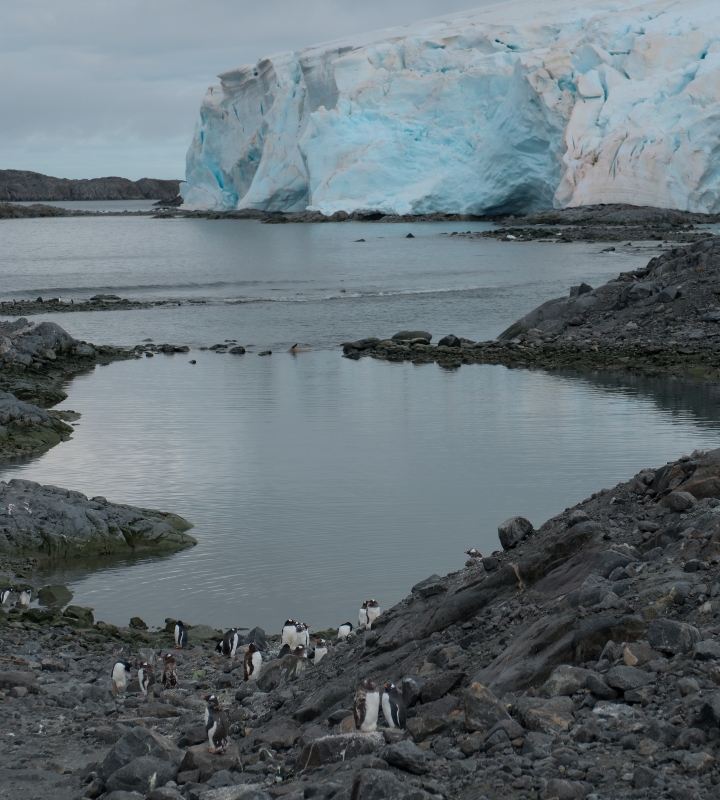
Moulting Gentoo Penguins gather on Anvers Island, Palmer Station
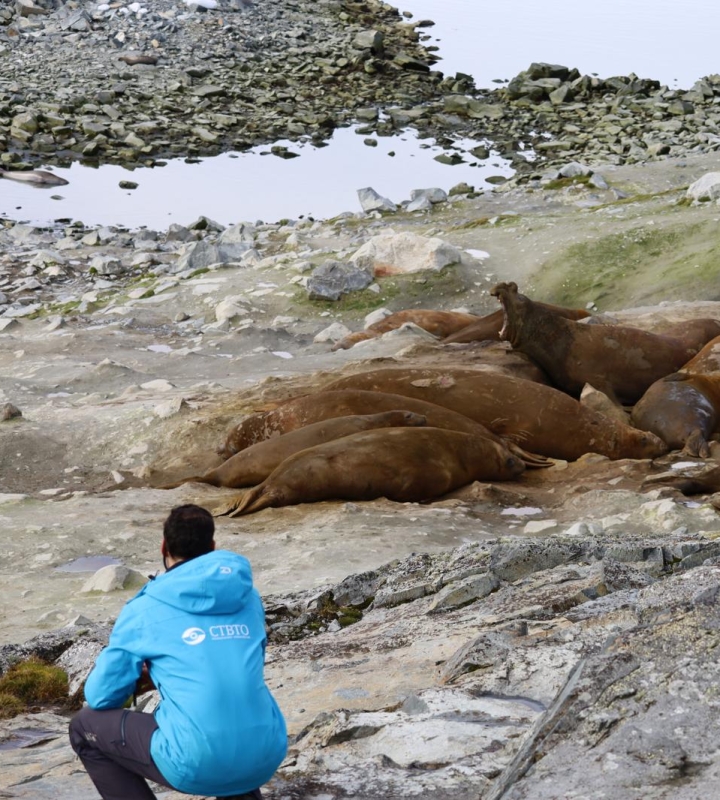
Brenn observing group of elephant seals from distance during visit to planned additional infrasound element sites on Amsler Island
Data from IS54 will support the verification regime. It may also contribute to civil and scientific research, including studies of atmospheric dynamics, glacial activity, and ocean-atmosphere interactions.
Completion and return
Following this installation, IS54 began transmitting data to the International Data Centre (IDC) in Vienna via the Central Recording Facility at Palmer Station. The successful transmission marked the operational readiness of the station, nearly three decades after its coordinates were first defined.
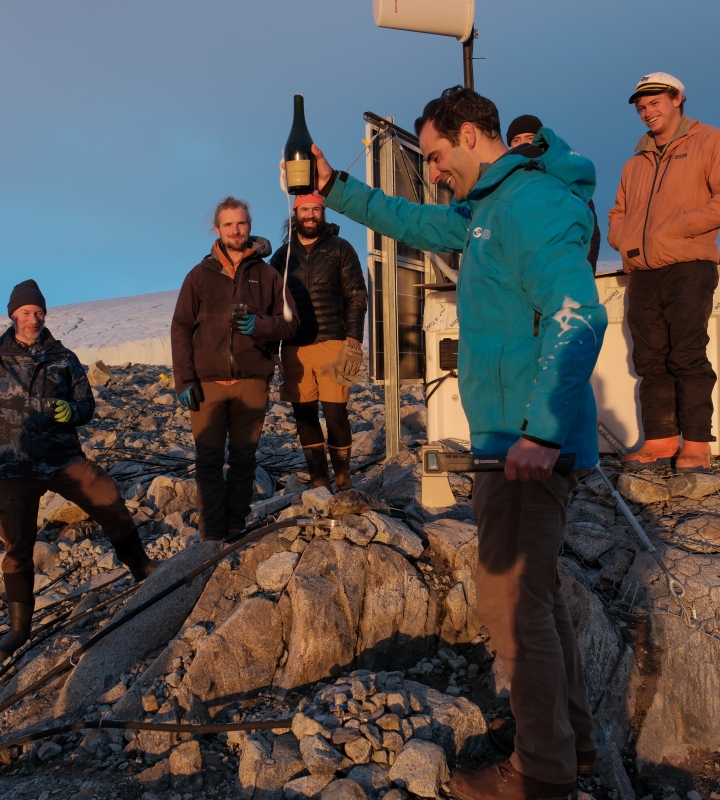
Ceremonial infrasound station christening, marking end of successful IS54 installation
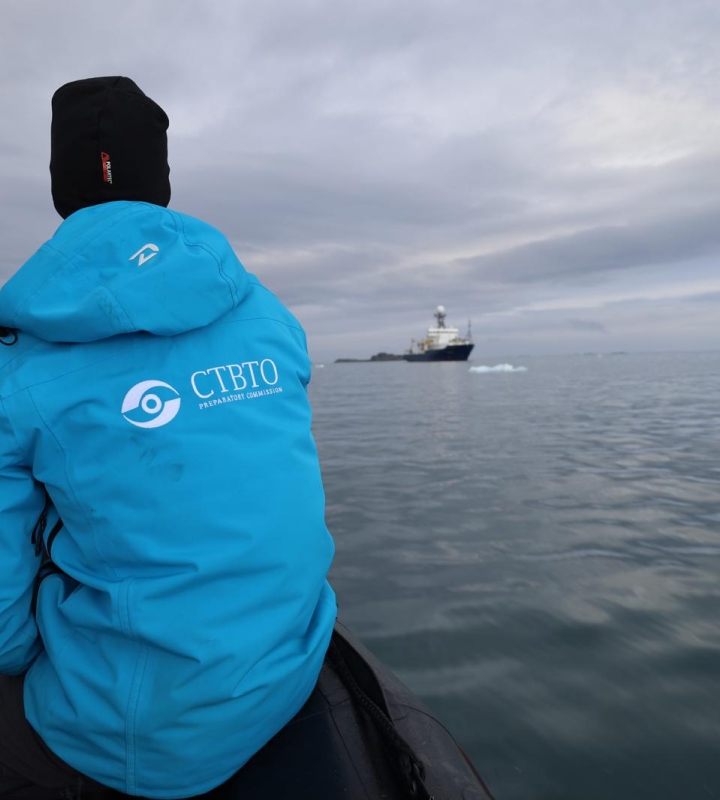
Zodiac boat ride to IS54 element H4 on Bonaparte Point
With the installation complete, the team began the return journey. Sailing north through the Gerlache Strait and towards the South Shetland Islands, they encountered unexpectedly calm conditions in the Drake Passage, often referred to as the “Drake Lake” when seas are unusually still.
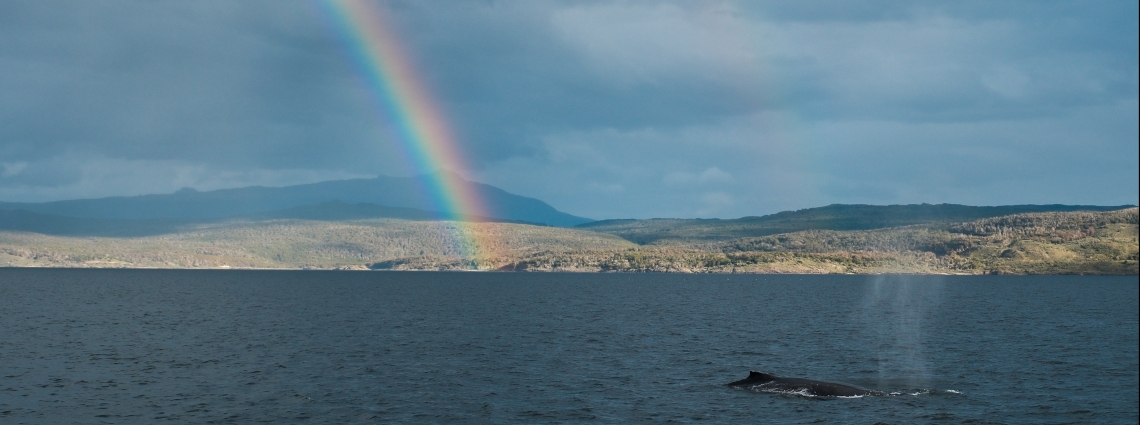
Humpback whale following S/V Pelagic Amundsen as crew returns to port in Ushuaia
The contrast with the southbound journey provided a fitting conclusion to a demanding mission.
A collective achievement
The United States currently operates 38 certified IMS facilities. IS54 will be the 39th and final addition to the US segment, the largest part of a global network that will ultimately include 337 facilities.
This was a project, the results of which have global significance. It is always the people that make or break these endeavours. Our sailing team working alongside the engineers and geophysicists reflects the symbiosis Pelagic Expeditions have developed for these one-off projects. Long may it last.
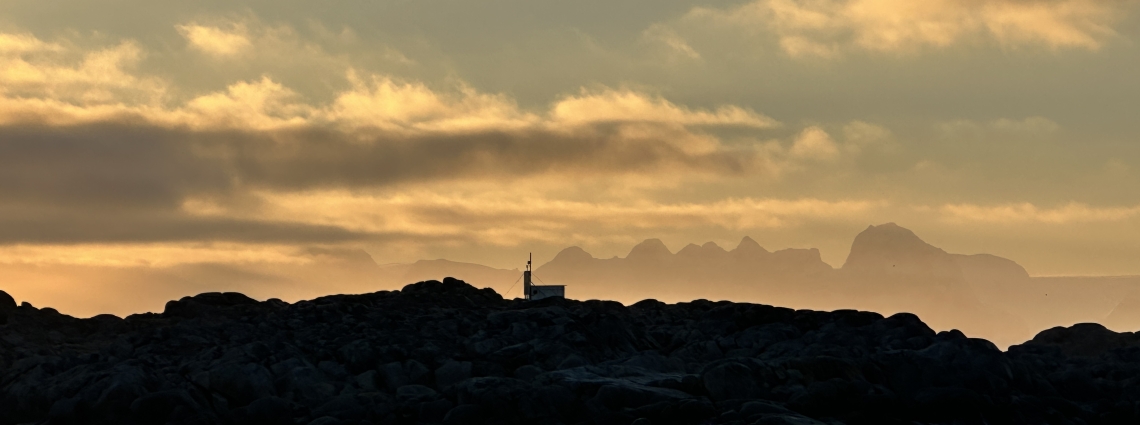
Final view of IS54 H4 element, as S/V Pelagic 77 Amundsen sails from Palmer Station at dawn
With IS54 now operational, the monitoring reach of the system extends further into one of the least accessible regions on the planet, reinforcing the CTBTO’s mission to uphold the global ban on nuclear testing.
This milestone was made possible with support from the United States, including the Defense Threat Reduction Agency and the University of Alaska Fairbanks.
15 Apr 2026
Flickr Album: IS54 - Palmer Station
